


Directions
Food Safety Tips:
- Wash your hands with soap and warm water for at least 20 seconds.
- Clean all countertops and equipment used for food preparation.
- Gently rinse all produce under cool running water.
- Use separate equipment for handling raw food and cooked food.
Preparation:
- Heat 2 tablespoons of oil in a large wok (or large skillet/ frying pan) over medium-high heat. Pour the beaten eggs and scramble until just set. Then move the cooked eggs to a separate plate and set aside.
- Heat up the rest of the vegetable oil, then add garlic and onion whites and sauté for 2-3 minutes. Once garlic and onion are fragrant and golden-brown (caramelized), add edamame and frozen vegetables, stir-fry for a couple of minutes until tender and fragrant.
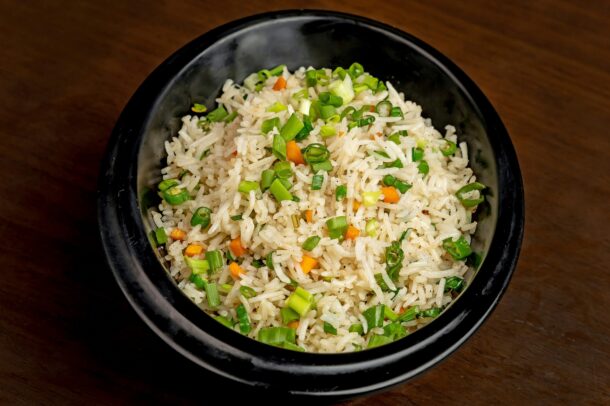
- Add the cold, cooked rice to the wok, and ½ (2 tbsp) of sesame oil, breaking up any rice clumps with your spatula. Pour the soy sauce and white pepper over the rice mixture and continue to toss until everything is well combined and warmed through.
- Return the scrambled eggs to the wok and stir them into the fried rice.
- Finish and Serve: Turn off the heat. Drizzle the rest of the toasted sesame oil over the rice and toss one last time to combine the flavors. Garnish with the green onion, greens and chili pepper flakes and serve!
Dietitian insights:
- Although soybeans are higher in potassium, they are also high in fibre! The fibre helps slow down the absorption of potassium in our body, making them a good choice in moderation.
- When purchasing frozen vegetables, it is important to avoid frozen spinach as it wilts as it freezes and concentrates the vegetable. Choosing a vegetable blend that has carrots, peas, beans, corn, broccoli, and cauliflower is a great option!
- Foods like soy sauce and broth can be high in sodium; it is important to look at the nutrition facts table with the goal to keep the sodium content to 10% or less.
A good way to reduce sodium from soy sauce while keeping flavour is to replace half of it with a low-sodium or no salt-added beef or mushroom broth.
Cooking rice in a low-sodium or no salt-added broth (chicken or vegetable) is a great way to add flavour to the recipe while keeping the sodium content on the lower side. This is a great way to replace bouillon powder.