
By Dani Renouf, Dietitian, MSc, CDE
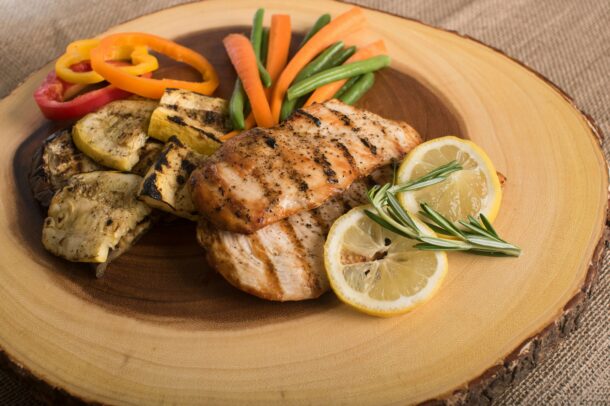
Image Photo by Mark DeYoung on Unsplash
As a dietitian for two decades, I admit that the concept of portion control did not really resonate until I had to start doing it for my own personal health. I realized that by understanding portion sizes, I was able to optimize my nutrition even more, despite generally eating varied and nourishing foods. Does this sound familiar? The idea of “spinning your wheels” might come to mind. That is because sometimes it is just as important to think about how much to eat, as it is what to eat. To be clear, each of us will have their individual goals and needs, so it is important to talk with your dietitian about your goals so that you can decide what “how much” will look like for you. Here are the top 5 tips to get you started on learning why portion sizes are more important than we think:
- You might be satisfied, but you are still missing important nutrients.
- This might show up as feelings of fatigue, low energy, and less motivation. Sometimes, these symptoms are related to vitamin, mineral, and other micronutrient deficiencies. So even though you enjoy your meals, they may be more heavily weighted on vegetables, and not enough protein, or not enough whole grains, and more meat-heavy. Whatever it might be, the imbalance of nutrients can lead to real deficiencies at some point.
- Tip: Plate your food and follow the healthy plate guide by making sure you include colorful fruit or vegetables, whole grains, and lean proteins at your meals and snacks.
- You might need to eat more than you thought.
- This is something I notice with clients more often – they believe they are getting enough of all the necessary nutrients, but they are actually undereating. This may look like a muffin and coffee at breakfast, or a light lunch in anticipation of a heavy dinner. Whatever the reason, putting all your nutrients in one meal’s basket can result in undereating at one meal, and overeating at another.
- Tip: Use a mix and match technique to round out your current meals. For example, add a fruit and 2 hard-boiled eggs to your muffin, add some tuna and cut up vegetables to your cheese sandwich, and make sure your soups have enough protein if you are using them as a meal.
- Extra calories might be adding up more than you thought.
- This looks like a handful here, a handful there, maybe of nuts, popcorn, chips, or even fruit. When we don’t allow our eyes to visualize the food on a plate or in a bowl, we have the tendency to forget that we ate, and then eat again a short while thereafter. A few handfuls a day of snack foods or any food our body does not use as fuel, will be stored as unwanted extra calories.
- Tip: Write down what you eat over the week in a journal because the non-judgemental act of keeping a food diary that you don’t share with anyone else is to be true to yourself and bring forward awareness of your habits during a busy day.
- You might be at risk for losing muscle mass.
- I often work with clients who have lost a great deal of muscle mass, despite having a good appetite, and enjoying their meals. This is because the portion of protein and carbohydrates at meals may not be adequate, or timing of meals may not be aligned with physical activity periods.
- Tip: Make a grocery list that includes easy protein and carbohydrate options that you can add to your current meals. This includes tuna, egg whites, Greek yogurt, and beans, nut butters, and seeds for protein and whole grain toast, crackers, pita bread, fruit, and pasta for carbohydrates. You can prepare each separately and have on hand when you need to boost your usual meal with either protein or starch.
- You might be over-restricting without noticing.
- For clients who are trying to lose weight, I often see them dropping entire food groups, and restricting many nourishing foods in hopes of creating that deficit. I also notice this in clients who are trying to manage potassium and phosphate levels. As habits of omitting important foods form, we tend to abandon them from our routine and this could cause significant deficiencies over time, particularly in calcium, heart healthy fats, and B vitamins.
- Tip: Meet with a dietitian who can help you plan meals which are lower in potassium and phosphate, but are nourishing at the same time. A dietitian can also complete a physical assessment to find out if you need to adjust your portions for optimizing muscle mass. Restrictive eating can be very hard on quality of life, so having support from your health team is necessary to prevent further mental health concerns down the road.